
The Life and Times of a Young Farm Boy by David Miner
I was born Feb 5, 1946. My parents were Maurice Miner Jr. and Inez Miner. We had a farm on Wintechog Hill Rd in North Stonington, Connecticut.
There was an old wooden barn that held about 24 cows in stanchions. The manure was cleaned by opening skuttle holes in a gutter. The manure went down to a lower floor and was later loaded and spread on the fields for fertilizer.
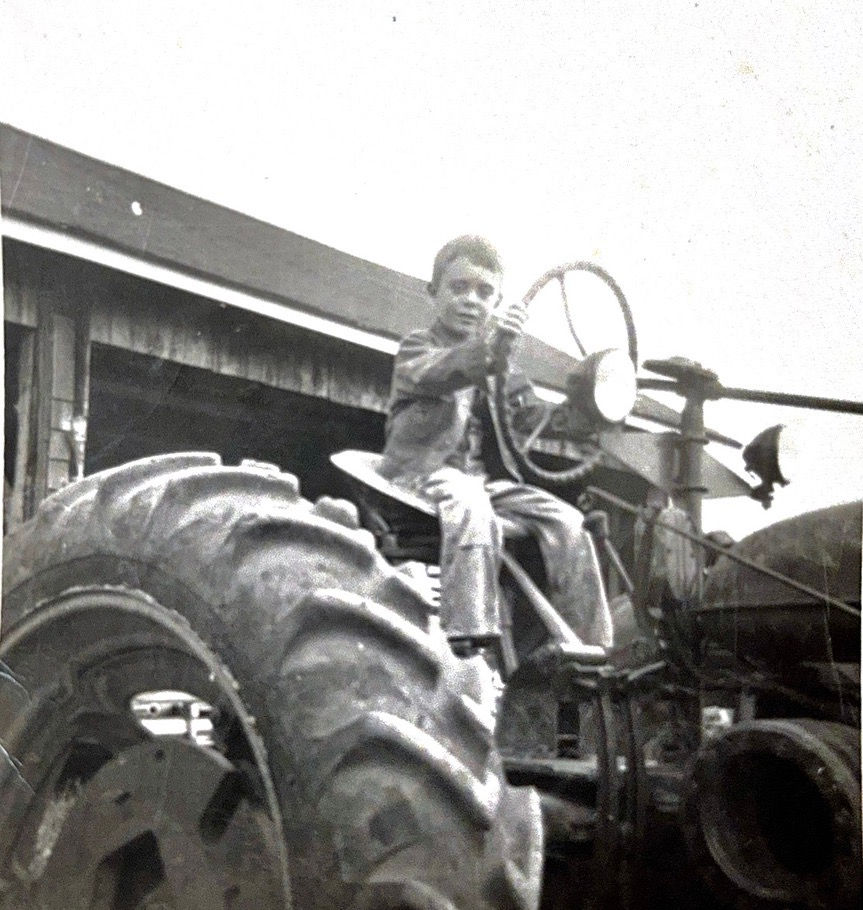
One of the first things I remember was a haymow with a track in the peak and a set of rollers on the track. Outside there was a set of huge forks that came down and grabbed the hay, then my grandfather's horse Jerry would pull the rope, and up would go the hay. When it got up to the top somebody would pull the hay to where they wanted it and release it. One day when I was about 12 we were unloading hay and my mother came out and said she was going to the beach with my 2 sisters and brother, and wanted to know if I wanted to go. Dave Lewis was helping unload the hay and he said to me, "we've got to get this hay unloaded." So I told my mother "no". It made me feel great.
When I was about six or seven I would go to the house from the barn and this rooster would always chase me. My father gave me a hoe and told me to hit him with it. So a few days later here comes the rooster. I turned and hit him with the hoe - the only thing is I cut his head off! So that night we had a great chicken (rooster) dinner.
One night my father was milking and I asked him if I could grain the cows. He said yes, so I took the metal scoop and started graining them. All of a sudden I tripped and cut my chin open. They had to take me to a Dr. Hill in Mystic. After he finished stitching me I said," do you think I can get home to see the Milton Berle hour?"
When my sister and I were about 8 and 9, my mother used to tell us to go outside and play, "you don't have to stay in the house". So one day we were outside and I went in the little workshop and found a can of green paint. I decided to paint my sister - didn't work out too well - I got punished. Then one day we were playing baseball. I was pitching she was batting. I threw the ball she hit it up in the air. I went running in to catch it. I hollered "I got it" and she said, "No I got it." She hit me in the mouth with the bat and chipped my front tooth. I went running in the house and I told her "don't come in until you find the tooth." Never did find it.
In 1955-56 we decided to build a new barn. My father drove to Vermont and purchased the lumber. Together with neighbors and relatives, we built the new barn for forty-six cows. My father would open the gate from the pasture and the cows would come in and find their stalls. Our dog Penny would walk down the alley looking for empty stalls. There might be one or two empty ones so you would tell her you missed a couple and she would go out the gate. A few minutes later - here she comes with the missing cows.
When I was young the telephone was a party line. There would be 2 or 3 families on the same line. You would pick-up the phone and my Aunt Bea would be talking. After a while you would have to say, "Aunt Bea we need the phone for a little bit." Back then I think a phone number was only four numbers.
My father and a friend of his used to go frost fishing down at the beach. I asked them one night if I could go with them they said sure. So off we go. It has to be real cold. When the waves would come in it would dump fish on shore and they got stunned from the cold air. I had to pick them up and put them in a pail - my hands got so cold I couldn't feel them. After that I hated fish for years.

When I was nine years old I joined the Meadow Lake Dairy 4-H club. The leader was Robert Hescock and in later years Dick Podant and Sarah Brown - all very good leaders that taught me a lot. We met in the old Town Hall upstairs and later at members' houses. The first year I showed at the 4-H fair I came in with my calf 13th out of 13. The older members told me, 'don't worry you'll get better" - and I did as years went by.
After we planted corn it had to be cultivated. My grandfather would came over with his old horse Jerry again I would ride the horse up the rows we would go never stepping on the corn. He would get to the end turn around and go down the next rows. Years ago they would plant the corn all in straight rows. When it got time to cut it you had to go in and cut 5 or 6 rows by hand and put it in piles. then they would drive the chopper with a truck behind it and pick-up the piles and throw them into the chopper. After you got to the end you had an opening and you could go back and forth chopping the corn. In later yrs they decided to plant in circles thus doing away with cutting up the middle and hand cutting. After the truck was loaded you would take it to the barn where there was a blower and a pipe up the silo. You would dump the corn in the blower and up it would go. There are very few silos left - it is mostly piled on blacktop and covered with plastic.
When I was 8 or 9 I would go to my grandparents farm for four to five days. I would help with chores and little things. The best part was dinner. My grandmother Lucy would make johnny cakes and dried beef gravy - luscious! My uncle would tell me to put a couple johnny cakes in my pocket for a snack later. My grandmother also made them for breakfast.
One day somebody gave me some banty chickens and a rooster. I kept them in a small coop and wired-in cage. After a while they outgrew it and I had to let them out. Then they started multiplying and started roosting in the old barn. My father told me I had to get rid of the chickens because they were making a mess. So I called up Mr. Caswell in the village and I told him he could have them, but to come at night when they were roosting. So he came with two of his boys. They went in the barn to catch them and one of the skuttle holes was open and he went downstairs in the manure. We all stood there and just laughed it off. (He didn't get hurt.) I was told later Mr. Caswell would take his car down to the Mystic River, park it, open the trunk and put down a board. He'd sprinkle corn on the board and in trunk. The ducks would walk up the board and into trunk. He'd shut the trunk and take the ducks home for dinner.
When I was about twelve I didn't have any good animals to show at the 4-H fair, so Mr. Hescock, my 4-H leader told me he would lease me two heifers to show, but I had to ride my bike down to his place and teach them to lead and fit them. I would go down after dinner and work with them about an hour. It was a great experience, and I placed very well. I even got a county dairy award that year at the 4-H Round-Up.

The next couple of years my sister and I purchased some Ayrshire calves and we did very well. The summer I got my license my friend John Beattie and I decided to go to Brooklyn Fair. So I borrowed a friend's pick-up truck, loaded my heifer in the truck and went over to John's and got his animal and off we went for the weekend. We did very well. I think we both won.
That summer Dave Birkbeck and my friend Louie Caswell and I all helped each other do hay. We finished one day and there was a fox and his den in the middle of the lot. I told Louie there was a bounty of $5 for a fox and I'd go back to the house and get the gun. When I got back Louie said
"He's still there." So I said, "I'll shoot first". I shot and missed. Louie tried next and missed. I think we shot six or seven times before we finally got him - but it was Saturday and the town hall wasn't open. So we stuck him in the trunk of an old car in a burlap bag. Sunday came and went, Monday came and went. Finally Tuesday we remembered and opened the trunk - and P.U.! We drove to town hall and I went in and got the town clerk, Patricia McGowan, and told her I had a fox and I was wondering if I could get the $5 for it. She said, "sure, but I have to clip his ear." She came and looked in the trunk and when she smelled that fox she said "never mind just come and get your $5". So Louie and I split it.
Before I got my license I would ride my bike to Clarks Falls to play baseball with a group of friends at Palmers farm then go jump in the brook to cool off. Then I'd get back on my bike and ride home for chores. After I got my license my father told me to take the farm truck after school and go up to my grandfather's and start to clean the chicken coops. So I went up and loaded a small load and brought it home. The hardest part was going down Cossaduck Hill with the load. Luckily there wasn't much traffic like there is now with the casino.
In the summer the town road foreman asked if I could help for a week because they were shorthanded. They were cutting brush on Chester Maine Rd. The older men would cut it with scythes and I would come along behind putting the brush in piles with a hay fork. At lunch time they would sharpen the scythes and I got to turn the handle on the grindstone. We would eat lunch right side of the road. Then Maurice Bromley would bring up the truck and we would load the brush on the truck. It was difficult but I made a little extra money.
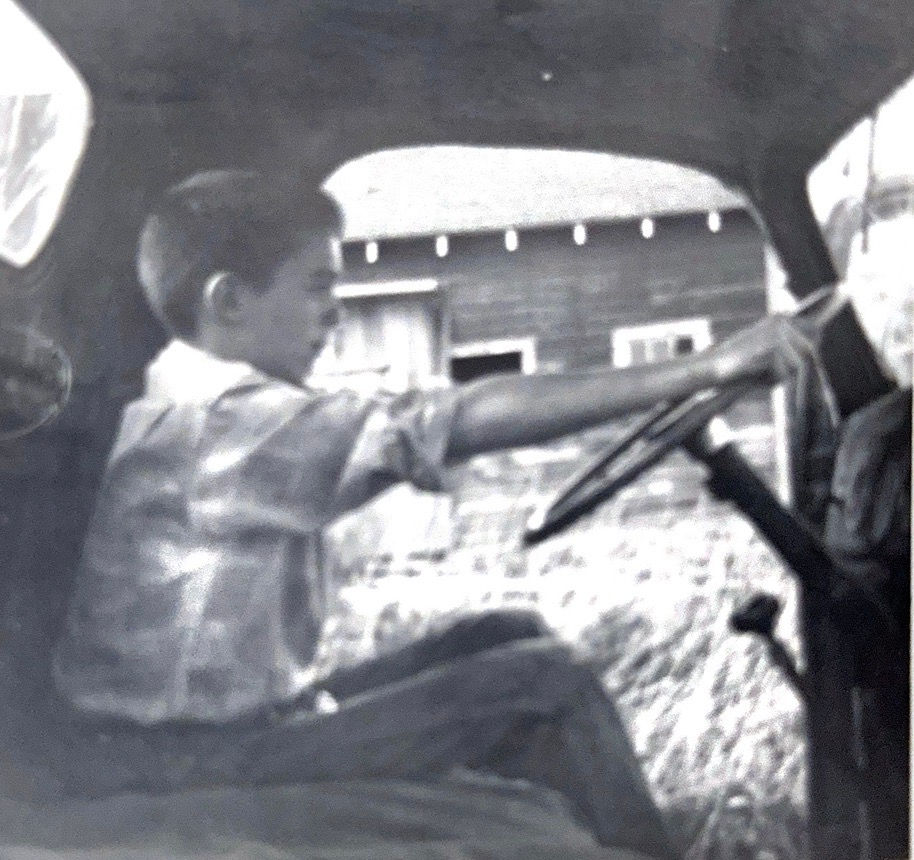
In the summer of 1961 I was 15 and I was helping my cousin in a big hay field where Old Mystic Village and Rt 95 are now. My cousin was mowing and I was conditioning the hay - squeezing the water out with a machine or crimper. My cousin finished mowing and told me we had to go to Groton and do two more fields for somebody else. So he left, and when I finished I was to go over there. Well I had to go through Mystic and when I got to the draw bridge, it was open so I had to wait. A policeman came over to me and said, "Do you have a license to drive that tractor? How old are you?" I told him 15. "Don't go anywhere I'm going to check." I was scared. He came back and said, "you're alright."
Just before I started 10th grade they told me I could transfer to NFA (Norwich Free Academy) and take the Vo-Ag course. I talked to my parents and they said it was up to me. There would be a lot more traveling and I wouldn't see my Wheeler schoolmates that much. I decided to do it. The first day- what a difference!
There were 650 students in my class compared to 30+ at Wheeler. There were only five or six in Vo-Ag - in other classes 20-25. The study hall class had 130 kids. I made it through 10th grade alright but I only knew about 20-25 students in my three years there. Most of the students wouldn't associate with us farmers. That was alright - I didn't want to associate with them!
In the 11th grade I transferred to riding the Ledyard school bus which was a lot better. When I started 11th grade the lady from the cafeteria called me down and wanted to know if I would like to wash dishes for a little extra money. I tried it and it wasn't bad. I worked during study hall for 1½ hours, and for 15 min before school getting the supplies out for the ladies to cook lunch. I made about $30 a week plus what ever I wanted to eat. The Vo-Ag class was good. I learned a lot about all kinds of agriculture, soil conservation, poultry and above all dairy which helped me a lot. We went on field trips and farm visits.
The 12th grade started out great. I met a few more students. I got a loan from WTIC channel 3. TV to buy a heifer. They loaned FFA (Future Farmers of America) students money to buy animals. My teacher and I went to a farm and I bought a registered Holstein. I paid the money back quickly so they gave me money to buy another heifer. I entered the state FFA showmanship contest and I won and got a free trip to Kansas to the National Convention. I didn't win there, but I got 2nd. I also entered the FFA State Dairy Judging Contest - which I won - and got a free trip to Waterloo Iowa for the National Contest. With help from family and friends to help my father I was able to go. I didn't win again but got 3rd. It was quite an experience.
I finally graduated in the summer of '64. Labor Day weekend came and the 4-H fair was on. My sister got a job as a waitress so I didn't have her to help me. I took my two Holsteins and my sister's animal down on Friday after morning chores. I was setting things up and they came over and told me that I had to go home right away. I found a couple of other 4-Hers to watch our animals. I thought the cows must have gotten out. When I got home there was a whole lot of people there and they said my father had passed away. What a shock. My sister and I decided to go down and pick up our animals. There was no more showing after that. That October my mother decided to sell the farm. I didn't have the money to buy her out so she sold it.
I would like to dedicate this story to my parents, especially my father who always told me, "hard work never hurts anybody" and I believed him.
Rest in Peace

Comments